
11 Ways Football Is Your Classroom: Lessons from the Sideline

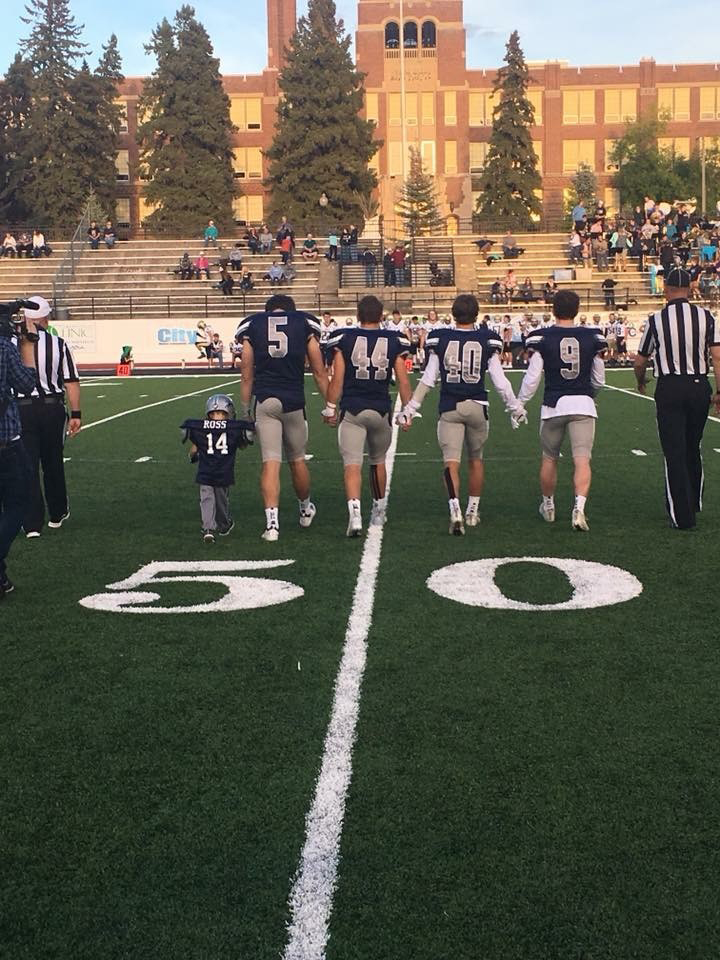
What teachers can learn from football coaches comes down to habits, not slogans: assess before you plan, build a staff you can lean on, coach instead of dictate, and treat mistakes as data. A veteran principal walks through eleven parallels between Friday night football and Monday morning teaching.


If you love football and you love teaching like me, I tend to find similarities at every turn. This article is meant to encourage discussion during any football or educator gathering. This article is not meant to make you a football expert or an armchair quarterback, but it can be used to make comparisons from the field to the classroom. Here are 11 ways football is your classroom!
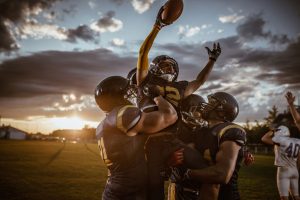
1 - There's No "I" in Team, but there is in "Winning"
It seems winning in football can be at all costs! In education, I would consider winning at all costs in a different fashion. Teachers have two separate battles in their classroom. A teacher must create a team of students that are college- and career-ready (or academically successful), and maybe even more importantly now, students that are socially and emotionally strong.
There are so many reasons why coaches and teachers must team together with colleagues, parents, students, and even community members. It takes a village in both the football arena and the classroom to find success. Pulling in as many people with expertise as you can makes a teacher's (or coach's) job much easier.
A teacher is "winning" when they see themselves, not on an island, but as just one integral part of a student's success story. Yes, the teacher is the adult in charge of the student's education in their classroom. Yet, a great teacher understands they need support from other teachers, specialists, administration, volunteers, and even community members. I would classify a successful teacher who can organize all these people and services as a coach. If you ask colleagues in my school district, they would tell you I joke about calling everyone "coach." This isn't because I am smart-alecky (well, maybe a little); it is because that person I call coach can successfully support education by supporting me in creating a positive learning environment for our students. For example, the computer tech I call every day for support is a major part of me being successful, and her advice to me is similar to a coach…hence, I say, "Thanks, Coach."

2 - Varied Abilities in the Classroom and on the Field
Teachers and coaches work with students who have a wide variety of skills and abilities. It is the job of the teacher and coach to find a player's strengths and also work on their weaknesses. The ability for a player to grow will give them a chance for more success and playing time on the field. Likewise, the more success a student is, the more they are going to want to repeat that feeling of growth through learning. These positive experiences are contagious, much like success on the football field.
Teachers and coaches must first assess the students' needs. Then find and use the best available resources, coupled with strong instruction to meet those needs. Some students need more practice and instruction than others, similar to football players who need more time doing drills and chalk-talk with their coach.
3 - Coaching vs. Dictatorship
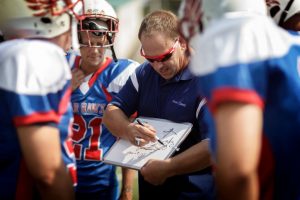
The best coaches know how to connect with their players. They build strong relationships based on trust. Their players will do anything for them, and even "go through walls" as one famous coach professed. In much the same manner, teachers need to first create strong connections with their students.
The ability to coach players and students is a much more successful model than dictating every decision. Creating independent thinkers that are able to problem solve and "go to solution" quickly should be the goal for both teachers and coaches.
As a dictator on the field and in the classroom, the decisions are only made by one person. When feedback and other people's opinions are curtailed, ownership of a common vision are near impossible to obtain. In a dictatorship, blame for failure is easily pushed onto others rather than owning the failure as a team and getting better.
Shared leadership among coaches and teachers creates a better learning environment for students and a better working environment for teachers.
4 - Communication Between Coaches On & Off the Field
Communication is vital to any relationship. The relationship between all coaches, as well as all teachers, is important in order to meet goals. Educational researcher John Hattie puts collective teacher efficacy at the top of his list of influences on student achievement. It is worth being precise about what that term means, because it gets garbled often. It is not a shared goal. It is the shared belief among a staff that their combined effort is what causes student learning, and that belief is what the research ties to achievement. Hattie's synthesis put the effect size at 1.57, later revised to 1.36, and he has said he would rather people stopped ranking these numbers at all. Those figures come out of a research synthesis rather than settled proof, so I would not lean on the ranking too hard. The underlying idea still rings true from where I sit… a staff that believes its combined effort is what moves students feels different to work in.
During a football game, some coaches do not stand on the sideline. These coaches are sitting with headsets on, above the field in a box in order to communicate with the coaches on the sideline. The sideline coaches are implementing and putting in place new defenses, as well as offensive plays that the coaches sitting above the game observe. Coaches up above get to see the entire field and see all the players working together, or not, as the case may be. They see what needs to be tweaked, and they can be proactive with their decisions as they see the "big picture."
In education, teachers are the coaches on the sideline. They are implementing ideas from their toolbox based on the observations they make while teaching. This is where communication between administration and teachers can come into play. While many of the decisions made on the sidelines are solid, communication between teachers and administration can strengthen when someone outside of the classroom, someone not on the sidelines, can see the "big picture." An administrator understands the expectations of students and teachers. They can give ideas, strategies, and advice that help the teacher instruct more effectively and efficiently.

5 - We Learn from Our Penalties and Mistakes
Making mistakes is part of the game. In my school, we use the mantra, "Mistakes are where the new learning goes." In the classroom, mistakes should not be the end of a student's learning experience. Too many times, educators and families put an unneeded expectation that failure is not an option. While a portion of that can be used, we are seeing more and more students who fail at something, and they stop trying. We want the exact opposite…keep trying no matter if you fail and learn from your mistakes.
During the 2018 season, I was at my son's football game and counted over 16 penalties (mistakes) thrown by the referees. At one point, I thought his team was not learning from their mistakes as they continued throughout the game. Fortunately, the other team was making just as many mistakes. His team ended up winning in overtime. They cleaned up their mistakes in the fourth quarter to come back from a 17-point deficit versus Missoula Sentinel.
In the classroom, a student may have a hard time completing long division. One small mistake in adding, subtracting, or multiplying, and the entire problem is incorrect. A student who makes one small mistake in their computation might quit and state, "I am a failure." When a teacher looks at their process and sees that 95% of the computation is correct, that teacher must change the student's mindset. In our school, we use the word "Yet." Yet means that a student may not have the correct answer, but they are going to get it because they are not going to quit… the power of "YET!"
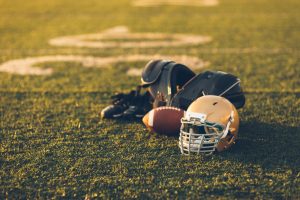
6 - Everyone Needs the Correct Gear to Play and Learn
Right away I think of funding education correctly. If education were a football game, I feel many legislatures and voters may say, "Helmet…whoa…way too expensive. We think you can play the game effectively without your helmet, and we think your shoulder pads can be downsized to a lesser quality…here try this cardboard!" Sounds ridiculous, doesn't it!
As football has changed in the past decade with rules, the gear has also changed. You can now inflate the inside of a helmet to a specific pounds per square inch, as well as adjust all pads inside of the helmet to fit a specific student's head. In fact, almost all of the gear is different than 25 years ago when I played football.
Education has changed tremendously in the past 25 years. Yes, you can still find teachers who put students into rows and use lecture as their main means of instructional delivery. I would argue that the teacher's effectiveness could be increased if all they are doing is lecturing.
My wife is a National Board Certified Teacher with a growth mindset. Her fifth grade classroom contains two desks, several couches, and a multitude of flexible seating. That is one classroom-design choice among many rather than a mark of better instruction, and plenty of effective teachers still work with desks in rows. She has found it suits her students and the way she likes to group them, and she funded it herself!
As educators, we need to fight to get the correct resources for our students so they can play the game too. We must find the best practice, research-based strategies and materials that meet the needs of each individual's brain…much like the new football helmets!

7 - Rules, Structure, and Procedures Help with Effectiveness and Efficiency
At a football game against Missoula Big Sky High School that fall, I sat with two sixth-grade girls from my elementary school. The girls are very smart, have a 4.0 GPA, and are active in sports. One girl admitted she does not know football. She asked me the differences between offense and defense. This caught me off guard. I didn't know where to start because of the vast amount of rules, structures, and procedures that the game of football has in place. I had to start building rationale and the "why" for some of the reasons that these rules were established. I thought, this is exactly like a classroom teacher, but many of us do not understand how far we must go in order for "all" of our students to understand the rules and expectations.
The most successful coaches understand the small things that affect the big things. They understand that a false start penalty will have a flag thrown every time the offensive guard moves his head right before the ball is snapped. If this is not taught specifically, expect that this player will continue to get flagged!
In education, the most successful teachers understand they must have a signal to get every student's attention. They practice this signal and get everyone's attention. If they continue to teach when even one student is still talking, that one student may take away from the learning of others. The effectiveness of the lesson can be drastically hindered.
Successful teachers teach the rules, practice the routines and procedures, and celebrate students who are doing the correct thing. For more success, they continue to practice throughout the entire year, giving them more instructional time in the end!

8 - Why Don't We Cheer and Celebrate the Officials, Also?
As a past basketball official, athletic director, and high school principal, I was in charge of working with referees. To say it is a thankless job is to say the least. I would hope to say that 99% of the referees are not out there to make bad decisions against a team, player, or coach…they are out there to create an even playing field for all participants. We cheer for the players, and even the coach at times, but why don't we cheer for the officials?
Many times as an official, I would have over 10,000 steps in one game…running up and down the court. My closest friends would tell me Good job, but they were usually officials doing the same thing. Not very often did I get a compliment from a player, coach, or spectator. Yes, I may not have been the best official, but I noticed this was true for our entire referee pool…compliments and cheering them on were non-existent. In all sports, it is understood we cheer for the players!
As a classroom teacher, we too are continually trying to level the playing field for our students like officials do for players. We differentiate curriculum, instruction, and assessment in order for all students to access the content. We implement the accommodations, modifications, services, and supports specified in students' IEPs or Section 504 plans. This happens daily for 180 days, and over 1000 hours each year. Teachers may hear an occasional "good job" and "thank you" from students and parents, but overall, celebrating educators like they are professional athletes should be the norm! SIDE NOTE: This is my goal as an education blogger!

9 - Instant Replay to Get It Correct
In professional and college football, officials use instant replay to get each controversial play and decision correct. This seems to take a lot of our viewing time, but we feel better when each debatable decision is made by slowing down the tape and reviewing. We can do this with education also, but it is getting more and more difficult to do so.
The constant battle between coverage and depth in education makes many of us not want to use "instant replay." We have way too much to cover and not enough time to get it done. We have expectations from our administrators and colleagues to make it to a specific place in our curriculum by a specific date. This can be impossible, and we can actually do harm to our students if we do not slow down and review the instruction.
As educators, we must battle to meet the needs of the students seated in front of us. We must speed up and slow down as our specific students' needs arise. We must push ahead with certain topics, while we also must slow down in order to get mastery from our students on specific content.
If we make a mistake when teaching and we are reflective with a growth mindset, we may say, "I need to re-teach that lesson." Then we must do it, because forging ahead when students do not understand for the sake of coverage can leave important learning gaps…you will be flagged eventually…it may be more than a 15-yard penalty!

10 - Fans and Parents Can Drive Success
A positive culture of football fans can create a virtual 12th player. Yes, football only allows 11 players on the field at once, but the twelfth could be the crowd! A cheering and supportive fan base can create an environment that leads to success… fans in the stands!
Going into the 2018 season, Missoula Hellgate had lost every football game since 2012…over six years. This bunch of gritty athletes and smart coaches began the year in 100+ degree weather. The coaches knew that the best time to practice would be the coolest…thus, practices started at midnight. It was 60-70 degrees, no wind, and perfect when the lights were on. This mentality and pushing their players helped the coaches end the loss streak.
On Friday, September 21, 2018, Missoula Hellgate beat Great Falls C.M. Russell High School. The streak ended. The flurry of social media, television, and newspaper articles flooded the state of Montana. The fans were tweeting; one reporter even tweeted out what was popular in America in 2012 as a reference point! I loved it! The fans and parents believed in their players and helped them make the necessary changes to their schedule and practices!
As stated above, we as educators have our students in class for roughly 180 days and a little over 1,000 hours each school year. Likewise, parents have their students for the other 7,000-plus hours. Partnering with them is the correct thing to do each year. We must have grit and perseverance when working with our parents. We must keep asking how we can get them not only involved in the education of their child, but how can we get them engaged and keep them engaged.
The most successful teachers bring parents and community members into their educational environment. These educators know that being an island within your school will only cost the students in the end, and can cause you more stress. I say we share the love…lean on your fans in the stands.
11 - Assess Along the Way
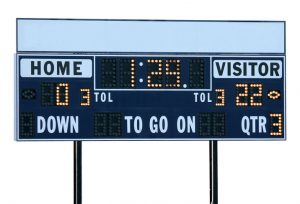
In the 2018 season, AA football in Montana contained 14 teams, the largest classification in the state. Each team played 10 games, and eight of the top teams were then placed into a playoff bracket. Those 10 games were assessments of how a team was doing before playoffs. If enough of those assessments turned out positive, the team had more wins. Each day in practice, the players are assessed on skills, drills, and cohesiveness. These formative checks tell the coaches how the players will perform in each summative assessment before, hopefully, the final championship game!
That season, my son's football team, the Great Falls High School Bison, started 4-1. It was their best start since 2002. The coaches were working hard each day in practice to determine the specific needs of individuals, as well as what the entire team could do better. Each week there was a new opponent, and they made specific plans for success.
Successful teachers use formative and summative assessment to drive instruction daily. They assess their entire class daily to find out what their students need. We call this formative assessment. They then implement ideas, strategies, and new content to meet each individual student's needs. The students practice, complete drills, and communicate progress. The successful teacher emphasizes teamwork as he or she understands that "we" is much stronger than "I." Each instructional period is broken down in order to teach students new content in order for them to be successful on the next test or summative assessment.
Hopefully these 11 ideas will help you in conversations with football enthusiasts, as well as colleagues and legislators living in your area. We need to celebrate what teachers do each and every day. They not only teach our students, but they are also helping to create every other profession in America!
Frequently Asked Questions
What can teachers learn from football coaches?
The habits, mostly. Coaches assess before they plan, run the same routines until they stick, review what went wrong instead of moving on, and share the work across a staff rather than carrying it alone. None of that is unique to football. It is just easier to see on a field than in a classroom.
Is the teacher-as-coach comparison actually useful, or is it just a metaphor?
It is useful as long as it changes something you do. If reading about game film makes you go back and re-teach a lesson you rushed, the comparison earned its keep. If it only makes for a good staff meeting opener, it did not.
What is collective teacher efficacy?
It is the shared belief among a school staff that their combined effort is what causes student learning. It is not a shared goal or a positive attitude. John Hattie ranks it near the top of his list of influences on student achievement, though he has said he would rather people stopped ranking effect sizes the way they do.
Do you need to coach a sport to use any of this?
No. Every parallel here works from the stands. The point is not the sport; it is that coaching makes certain teaching habits visible in a way that a closed classroom door does not.
- The lesson list is a habit list - what teachers can learn from football coaches is mostly about routine: prepare, assess, adjust, repeat.
- Assessment comes before the plan - coaches read the roster before they write the playbook, and formative checks do the same job in a classroom.
- Coaching beats dictating - shared leadership builds independent problem solvers, on the field and in the room.
- Mistakes are information - a penalty and a botched long-division problem are both worth reviewing rather than moving past.
- Nobody does it alone - collective teacher efficacy is a staff's shared belief that their combined effort causes learning, and Hattie's research synthesis associates it with stronger achievement.
Most of the habits in this article get easier when you have training behind them, whether that is a first credential, an added endorsement, or a step toward an administrative license. The sponsored programs on this page include options built for people already working full time in a school. Educator certification, endorsement, and administrator licensure requirements vary by state, so verify that a program meets the requirements where you intend to work.
As a 5th grade teacher, in 2010 Jon won the Presidential Award for Elementary Math and Science Teaching (PAEMST). As a principal, his school won the 2012 Blue Ribbon Award. In 2018, he won the National Distinguished Principal Award (NDP). In 2019 he won the National No Kid Hungry Breakfast Hero Award.
Jon is the author of three guides published on teacher.org: An Educator's Guide to Combat Bullying & Bully Prevention; Teacher Evaluation: A Transition Guide to Exemplary Performance; and You are the Wild Card: Infusing Fun Back into Curriculum. He has authored a children's picture book that was released January 2019 titled Benjamin’s Visit to Principal Reads Office…again! (available at www.archwaypublishing.com)
- Learning How to Say No and Set Boundaries with Parents - November 21, 2022
- How to Implement a Check-In, Check-Out (CICO) Behavior System - September 26, 2022
- Teacher Core Values: 7 Strategies for Living Your Code - August 15, 2022