
Careers in Education: Beyond the Classroom | Teacher.org

Careers in education go well beyond the classroom, spanning school administration, school counseling, curriculum design, instructional design, educational technology, nonprofit program work, and education policy. Public classroom teaching requires a state-issued license, and many other paths require a relevant degree; counseling, psychology, and administration often require graduate credentials, too.


And while jobs in education typically lead to teaching in some fashion, roles in consulting, administration, curriculum, policy, and nonprofit education work may also be options. (School board service is usually an elected or appointed governance role, not a standard degree-based education career.) An education degree can support many career paths, but requirements vary widely by role, state, employer, and whether the job is school-based, clinical, administrative, nonprofit, or policy-focused.
Below are several areas open to employment and educator careers when entering the world of education.
Considering a Career in Education?
Teaching suits you if you want to work directly with students and help them build the skills they'll carry into whatever comes next.
A career in education can include classroom teaching, school counseling, school psychology, administration, library/media services, curriculum work, and student-support services. Counseling and psychological services usually require specialized graduate training and state credentials.
Read on to hear about the various options available to someone interested in a career in education.
Why Should I Pursue a Career in Education?
- Job Outlook: BLS projects modest national declines through 2034 for several core classroom-teaching occupations, but annual openings remain substantial because workers transfer to other occupations, leave the labor force, or retire. The BLS Career Outlook lists about 91,000 projected annual openings for elementary school teachers alone. Preschool teachers are projected to grow nationally, and the BLS's detailed table shows small projected growth for preschool special education teachers and special education teachers, all other, even though special education teachers overall are projected to decline slightly.
- Benefits: Many public school teachers receive health insurance and retirement benefits, but benefit structures vary by state, district, school type, bargaining agreement, and employment status. Some teachers work under tenure, continuing-contract, seniority, or salary-schedule systems, though job protections and step increases vary by state law, district policy, contract, and school type. Teachers often work on a school-year calendar with winter, spring, and summer breaks, but pay schedules and whether compensation spreads across 10 or 12 months vary by district and contract.
- Teaching What You Love: Teachers get to teach subjects they actually care about, and discover new facets of those subjects every day by sharing them with young, curious minds.
Read more about a master's degree in education.
The Career Path for Teachers
Teacher demand varies by state, district, grade level, and subject area. Substitute teaching, paraprofessional roles, residencies, and approved preparation programs can provide early classroom experience, but full-time public teaching generally requires state certification.
While there are multiple ways to begin gaining classroom experience, it helps to have a longer-term idea of your preferred role, grade level, subject area, and credential pathway before entering the field.
In fact, with such a wide range of career options ahead of you, it can be hard to decide where to focus your pursuits. There is no single best educational career. The right fit depends on whether you want to work directly with students, support educators, lead schools, design curriculum, work in policy, or manage programs, along with your personal interests and the work environment that most appeals to you.
Below are a few ways one might approach an education career. Take a look to see which one is right for you.
From Classroom Teacher to School Leader
Many teachers start their careers in the classroom with the long-term goal of growing their expertise to take on leadership positions within their schools. This can be an exciting and deeply rewarding opportunity for educators to run with what they've learned from their experiences and make a broader-scale impact on student life. Leadership roles may offer higher pay, but they also usually involve additional credentials, longer work calendars, supervisory responsibilities, and accountability for schoolwide outcomes.
The path to becoming a school leader usually starts with classroom teaching, which provides the most insight possible into student needs within a given community. Classroom teachers of all grade levels typically start their careers as entry-level educators in public or private schools. As they gain experience and improve their skills, they can become eligible for leadership roles within their schools, such as department chairs or instructional coaches. These can give teachers a first taste of the larger organizational responsibilities of administrators and an acclimation to the macro-level perspective needed to make major academic decisions.
To become a public school administrator, teachers typically need experience, a graduate degree in educational leadership or administration, and a state administrator license or certification. Private school requirements vary. That preparation can lead toward principal, assistant principal, superintendent, district administrator, dean, program director, or instructional-leadership roles, depending on state credential rules and employer requirements.
Becoming a Specialized Teacher
Other teachers who do not choose to pursue the administrative path instead continue their careers in teaching, developing a specialty. Specialized teaching roles may focus on English learners, special education, gifted education, reading intervention, career and technical education, bilingual education, early childhood, or specific content areas. Endorsement and licensure requirements vary by state.
Some teachers pursue specialized endorsements, certificates, or graduate programs early in their careers. In contrast, others add endorsements after classroom experience, often after teaching students with academic needs and witnessing their educational struggles firsthand.
Alternative Careers for Teachers
While some educators wish to develop their careers purely within a school setting, there are other jobs for education majors and experienced teachers to put their knowledge and insight to use. These can be excellent opportunities for those looking for a change of pace from the busy, day-to-day work on campus with students.
There are many reasons why teachers decide to leave the classroom, but the good news is there are plenty of excellent job opportunities for teachers who don't want to teach.
Some teachers may choose to transition into teaching-related professions, such as curriculum development or educational consulting. These roles may involve developing educational materials and programs, conducting teacher training, or providing expert advice to schools and educational institutions. Drawing from observations from their time in the classroom, teachers can be resourceful in developing effective and engaging course materials.
Other educators move into advocacy, nonprofit leadership, curriculum publishing, policy analysis, research, professional learning, or education technology roles. This can involve graduate study in education policy, public policy, public administration, law, research, or a related field. However,h many policy careers also build from advocacy, research, government, nonprofit, or district experience, often starting with on-the-ground efforts such as volunteering or attending local government meetings.
If you're looking for careers in education that aren't teaching, some of the following job titles may appeal to you:
- Curriculum developer or instructional designer: school-district curriculum roles may prefer or require teaching experience, certification, or a master's degree, while corporate instructional-design roles often do not.
- Education consultant: requirements vary widely by niche, with classroom experience, leadership experience, subject expertise, and a track record of results often mattering more than a specific credential.
- Education policy analyst: usually requires strong writing, research, and data-analysis skills, often alongside a graduate degree in education policy, public policy, economics, statistics, or a related field.
- Educational technology specialist: also called an instructional technology coach or learning designer, with requirements that vary by district or company and by whether the role supports instruction, software, training, or systems.
- Nonprofit education program manager: often requires experience in program design, grants, operations, evaluation, partnerships, or community engagement in addition to education knowledge.
A Teacher's Perspective: Why I Left the Teaching Profession and Have Come Back
The following is one teacher's personal account and reflects their own experience, not a representative survey of the profession.
It's no secret that teaching is a job whose rewards are matched by its rigor. Unfortunately, many in the profession face burnout after years on the job, a problem exacerbated by the challenging conditions of many schools. Having taught high school for over ten years, I, too, eventually fell victim to burnout, attributing it to the long hours and high pressure of the work, as well as the immense energy required to run a classroom full of students.
Feeling fatigued, I decided to pursue a new career path and found work as a writer for a large corporate retailer. (I hold a BA in English, which served me both as a Language Arts teacher and a professional copywriter.) While my work was nowhere near as demanding as the daily grind of teaching ninety students a day, it was also far less fulfilling. As I looked at other career options, it became clear to me that nothing else would allow me to make the meaningful contribution that is teaching, bringing my knowledge and wisdom to encourage the next generation of thinkers. After much deliberation - and more than a few much-needed naps - I decided to return to the teaching profession.
In order to return to teaching, I needed to approach the job with longevity in mind.
Now that I am teaching again, I am more mindful of my work/life balance, understanding that preventing burnout is an important part of my job. I have also been more mindful of channeling my professional efforts toward alternative careers in education, which can potentially offer viable career opportunities that are still close to the causes I care about if I ever need a change of pace again.
While much has been written about the difficulties of education, let my story be a reason to reconsider. There is simply no job that rivals the up-close impact you can make on the lives of young people, and if you're meant for the work, there's nothing else you'll find as rewarding.
Frequently Asked Questions
What are the different careers in education besides teaching?
Beyond the classroom, education careers include school administration, school counseling, school psychology, library/media services, curriculum development, instructional design, educational technology, nonprofit program management, and education policy. Several of these require graduate education and state credentials.
Do I need a teaching license for every educational career?
Public classroom teaching requires a state-issued license or certification, and public school leadership, school counseling, school psychology, library/media, and specialist roles often require separate state credentials. Private, nonprofit, corporate, and policy roles vary. Roles like instructional design, education consulting, and nonprofit program work may not require a teaching license. However, school-district curriculum roles may prefer or require teaching certification, classroom experience, or graduate training.
Can I move from classroom teaching into school administration?
Yes, and it's a common path in the field, though it isn't the only route. Teachers often build classroom experience first, then pursue a graduate program in educational leadership or administration, and the state administrator credential required for principal or superintendent roles.
What if I don't want to work in a school building at all?
Curriculum development, educational consulting, education policy analysis, and nonprofit education program management all let you use an education background outside a school building. Several non-school-based paths may value graduate training in education, public policy, instructional design, data analysis, or nonprofit management more than a teaching license, though requirements vary by employer.
What is the job outlook for education careers?
It varies by role. BLS data projects modest national declines in several core K-12 teaching categories through 2034. Still, annual openings remain substantial due to retirements, occupational transfers, and other labor-force exits, even as total employment is projected to decline. Preschool teachers and a few special education subcategories are projected to grow, while special education teachers overall are projected to decline slightly.
- Teaching is one path, not the only one - education careers also include administration, counseling, school psychology, curriculum design, educational technology, nonprofit leadership, and policy work, each with different credential requirements.
- Job outlook is nuanced - BLS projects modest declines in several classroom-teaching categories through 2034, but annual openings remain substantial. Preschool teachers and limited special education subcategories are projected to grow, while special education teachers overall are projected to decline slightly.
- Classroom-to-leadership is a real track - department chair or instructional coach roles may follow classroom experience, but public administrator jobs usually require graduate preparation and state administrator credentials.
- Non-teaching paths exist without leaving the field - curriculum development, education consulting, policy analysis, and educational technology all use an education background outside the classroom.
- Fit matters more than any single path being "best" - the right choice depends on whether you want to work directly with students or shape the systems around them.
Whichever direction appeals to you, most paths in this field run through a degree program of some kind. The sponsored programs on this page include tracks built for classroom teaching as well as programs geared toward administrative, counseling, and specialist roles.
Education Career Paths, Typical Requirements, and Job Outlook
Below are common career paths in education, ranging from preschool teaching to administration and library science, each with typical responsibilities, education requirements, and, where available, projected job growth and salary data from the U.S. Bureau of Labor Statistics.
Learn more about a teaching degree online.
Jump to Careers in Education
- Art Teacher: Requirements, Salary & Jobs
- Biology Teacher
- College Professor
- CTE Teacher: Two Certification Paths
- Elementary School Teacher 2026
- English Teacher
- ESL Teacher
- High School Teacher
- History Teacher: Requirements & Salary
- Kindergarten Teacher: Requirements & Salary 2026
- Math Teacher
- Middle School Teacher
- Montessori Teacher: Requirements, Certification & Salary
- Music Teacher: Requirements, and Salary
- P.E. Teacher: Requirements, Salary & Job Outlook
- Preschool Teacher
- Principal
- Reading Specialist or Literacy Coach: Requirements Guide
- School Administrator
- School Counselor: Requirements, Salary & FAQ
- School Librarian
- School Psychologist: Degree & Salary Guide
- School Secretary
- Science Teacher
- Special Education Teacher 2026
- Substitute Teacher: Requirements
- Superintendent: Requirements & Salary
- Teaching Assistant
- Vice Principal
Art Teacher: Requirements, Salary & Jobs

An art teacher is one who educates students about the creation of art. Generally this means creating art in some type of classroom setting. Some art teachers will work within the school system, while others may teach students of various ages in a community center or other type of setting. Art teachers may also offer private lessons in some cases. If in the school system an art teacher may teach basic techniques, while at the higher levels art teachers are likely to focus in part on art history. Art teachers have the option to work anywhere in the world in which a need exists.
Learn more about how to become an Art Teacher: Requirements, Salary & Jobs >>>
Biology Teacher

Biology teachers are most often found at the high school or college levels. This type of teacher can work in a private, public, charter, or online school to develop curricula that meets current educational standards. This typically involves creating basic experiments, presenting lessons, and helping students carry out scientific investigations. In addition, biology teachers at the high school level may be required to give standardized testing, work with parents on student performance, and provide approved disciplinary actions if needed to modify student behavior. Many teachers also serve as advisors to clubs and other organizations before and after school hours.
Learn more about how to become a Biology Teacher >>>
College Professor

A college professor is one that teaches mostly young adults in a given subject area at a private, public, or online school. A college professor is responsible for teaching the subject area in which they are trained, as well as guiding students in the right direction as far as completing a degree. Professors are also often responsible for writing recommendation letters for jobs, higher level educational programs, or even scholarships. A professor must create tests, assignments, and projects that allow students to demonstrate knowledge in the given subject area and provide grades for each. In addition, professors may serve as advisors to clubs or organizations.
Learn more about how to become a College Professor >>>
CTE Teacher: Two Certification Paths

CTE teachers instruct students in career-focused subjects like welding, culinary arts, healthcare, automotive technology, construction, and business, often blending classroom instruction with hands-on lab or shop work. Unlike most other paths on this page, CTE offers two distinct routes: a traditional bachelor's-degree path, or an industry-experience path where years of hands-on trade work can substitute for the degree entirely in many states.
- 2025 Annual Median Salary: $65,030 (Middle School) / $66,270 (Secondary School)
- Projected job growth (2024-2034): -1.4% Middle School (900 openings/year) / -1.8% Secondary School (6,200 openings/year)
Education Requirements: A bachelor's degree and teacher preparation program, or, in many states, several years of industry work experience substituting for the degree in approved subject areas. Requirements vary significantly by state.
Learn more about how to become a CTE Teacher: Two Certification Paths >>>
Elementary School Teacher 2026

Elementary school teachers teach basic subjects such as science, basic math and English. Elementary school typically comprises of kindergarten and first through fifth or sixth grades, although it may also include seventh and eighth grades in some districts. They prepare students for later grades and encourage their students to persevere with challenging tasks.
- 2021 Yearly Salary (Median): $61,350 per year
- Career Growth Average and Estimates for 2021–2031: 4% (60,200 jobs)
- Education Requirements: Usually requires a bachelor’s degree in education. Public school teachers must obtain a license.
Learn more about how to become an Elementary School Teacher 2026 >>>
English Teacher

As an English teacher you are required to instruct and inform students in written, verbal, and spoken language. A strong knowledge base in writing, grammar, punctuation, vocabulary, and visual literacy is imperative. English teachers work at all levels, but are predominantly found from the sixth grade through college as teachers of solely English. An English teacher is required to hold a Bachelor’s degree or higher in most states. Duties are likely to include testing, grading, student supervision, parental and peer meetings, and possibly curriculum development tasks. Salaries vary greatly from state to state and with educational levels.
Learn more about how to become an English Teacher >>>
ESL Teacher

ESL Teachers teach students to read, write and speak in English. They often focus on teaching practical words and phrases necessary for conversation in work and daily life. They may also help students to take citizenship and ESL exams. An ESL classroom typically contains students from many different countries and cultures. ESL teachers often have students at various levels of ability levels in their classes. Different strategies are used to meet the needs of an entire class or one-on-one.
- 2021 Yearly Salary (Median): $59,720
- Career Growth Average and Estimates for 2021–2031: -6% (-2,800 jobs)
- Education Requirements: ESL teachers in public schools are required to have a bachelor’s degree and a state-issued certification or license.
Learn more about how to become an ESL Teacher >>>
High School Teacher

High school teachers generally teach students from the 9th through 12th grades and help prepare students for life after graduation, whether at the workplace or in college. While some specialize in one subject, such as science or English, others specialize in electives such as physical education or music.
- 2021 Yearly Salary (Median): $61,820 per year
- Career Growth Average and Estimates for 2021–2031: 5% (48,700 jobs)
- Education Requirements: High school teachers must have at least a bachelor’s degree. Public school teachers must also have a state-issued certification or license to teach their chosen subject.
Learn more about how to become a High School Teacher >>>
History Teacher: Requirements & Salary

History, or Social Studies, teachers are most likely at the middle school, high school, and college levels. A history teacher is required to teach on topics related to various historical events and periods. At some levels, specific histories are required, such as state history, foreign history, or specific time periods and eras. A history teacher is responsible for student performance, meeting with parents, peers, and administration, testing, and in some cases, extracurricular activities. A history teacher at the college level may be required to teach in a certain area as well while offering students guidance and supervision on a larger scale.
Learn more about how to become a History Teacher: Requirements & Salary >>>
Kindergarten Teacher: Requirements & Salary 2026

A kindergarten teacher teaches very young students who are typically aged five or six. A kindergarten teacher is required to supervise, assess, test, and teach students the basic skills necessary to build all future education upon. A kindergarten teacher is required to teach basic math and literacy skills while also guiding students in emotional, physical, and mental development. Kindergarten teachers are often required to help with other activities that may include supervision duties, during lunch or recess, or activities that take place outside of normal school hours. Kindergarten teachers need to be active and engaging in order to work with this age group.
Learn more about how to become a Kindergarten Teacher: Requirements & Salary 2026 >>>
Math Teacher

A mathematics teacher is responsible for teaching math skills to students at various levels. Teachers who solely teach math subjects will most likely be found in middle schools and high schools. This is one teaching area in which all grade levels can be taught depending on the type of mathematics a person desires to teach. Teaching at higher levels in specific math types, such as algebra, geometry, or statistics, will most likely require certification in that subject. Teachers are required to teach both basic and upper level concepts in a manner that is age appropriate and clear for the group in which they are assigned. Math teachers need to teach, plan, test, assess, and encourage on the daily basis to help students succeed.
Learn more about how to become a Math Teacher >>>
Middle School Teacher

Middle school teachers specialize and teach in single subjects, as opposed to elementary school teachers. Middle school typically encompasses grades sixth through eighth and in some districts is called junior high and encompasses grades seven through nine. Non-teaching responsibilities include grading assignments, creating lesson plans and communicating with parents and colleagues.
- 2021 Yearly Salary (Median): $61,320 per year
- Career Growth Average and Estimates for 2021–2031: 4% (25,000 jobs)
- Required Education: Middle school teachers typically must have at least a bachelor’s degree. Public school teachers must also have a state-issued certification or license.
Learn more about how to become a Middle School Teacher >>>
Montessori Teacher: Requirements, Certification & Salary

A Montessori teacher is unlike the traditional teachers that most people think of when educational environments come to mind. A Montessori teacher does not ‘teach’, but provides guidance to students in a prepared environment. This allows students to find their own knowledge over time. Montessori teachers use practical, hands-on forms of guidance to allow children of all ages to discover their own abilities, strengths, and weaknesses. This may mean preparing a meal by actually cooking, peeling, chopping, etc., as opposed to reading about how to prepare a meal in a book. Though Montessori teachers can be found at all levels, early childhood ages are the most likely groups to experience this type of teaching.
Learn more about how to become a Montessori Teacher: Requirements, Certification & Salary >>>
Music Teacher: Requirements, and Salary

A music teacher is a teacher who teaches the basics of music theory and ability in various age groups. Music teachers at the elementary level are most likely to teach multiple age groups and offer instruction in singing on key, reading music, and appreciating basic instruments. At the middle school level a music teacher may actually be a choir director or band leader, though some extra training or classes beyond a Bachelor’s degree may be required. The same is true at the high school level though more music theory may be introduced. At the college level a music teacher is likely to teach both general music appreciation classes as well as specific skill classes based on instruments or voice.
Learn more about how to become a Music Teacher: Requirements, and Salary >>>
P.E. Teacher: Requirements, Salary & Job Outlook

A physical education teacher is an instructor that focuses on physical development and ability in students of all ages. A PE teacher is required to teach basic skills in a variety of sports based on the age level of the student, as well as keep the students safe during such activities. Gym teachers are also expected to encourage students to stay active and healthy as part of an overall lifestyle. Physical education teachers are also required to work with fellow teachers, administrators, parents, and students to improve grades and abilities throughout for all grade and age levels.
Learn more about how to become a P.E. Teacher: Requirements, Salary & Job Outlook >>>
Preschool Teacher

Preschool teachers educate and provide care to children younger than 5 years old. They focus on language, motor and social skills to young children. Play, social interaction and other techniques are used.
- 2021 Yearly Salary (Median): $30,210
- Career Growth Average and Estimates for 2021–2031: 15% (13,500 jobs)
- Educational Requirements: In public schools, preschool teachers are generally required to have at least a bachelor’s degree in early childhood education or a related field. An associates degree is required at minimum almost everywhere.
Learn more about how to become a Preschool Teacher >>>
Principal

Principals oversee all school activities and staff. They develop and maintain curriculums, manage school budgets, supplies and maintenance. They are also the public representative of their school and listen to the concerns of parents and community groups. They report to a superintendent.
- 2021 Salary (Median): $98,420 per year
- Job Growth 2021–2031: 5% (14,200 jobs)
- Required Education: Most schools require a master’s degree in education leadership or education administration. A minimum number of years of classroom teaching, varying by state, is generally required.
Learn more about how to become a Principal >>>
Reading Specialist or Literacy Coach: Requirements Guide
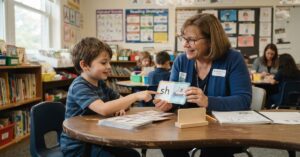
Reading specialists and literacy coaches take on a school or district's most challenging literacy work, though the two roles differ: reading specialists work directly with students on assessment and intervention. In contrast, literacy coaches focus on improving teacher practice and schoolwide literacy systems. Both typically require an existing teaching license, prior classroom experience, and a graduate program in reading or literacy education, though exact requirements vary significantly by state.
- 2024 Annual Median Salary: $74,720
- Projected job growth (2024-2034): 1% (2,900 jobs)
Education Requirements: Most states require an existing teaching license, prior classroom experience, and a graduate program in reading or literacy education; some also require a state exam. Requirements vary by state.
Learn more about how to become a Reading Specialist or Literacy Coach: Requirements Guide >>>
School Administrator

The title of school administrator can include roles such as principals, vice principals, instructional specialists, coordinators, and more. They lead teachers and other staff in the daily activities of a school. School administrators can be found at the elementary, middle, and high school levels. An administrator must continually evaluate a school’s progress toward goals that are often set forth by the district. This may include budgeting issues, curriculum issues, or hiring of teachers and staff. An administrator is often required to work longer hours and an extended year when compared to teaching staff. A Masters degree or higher is required for this type of position.
Learn more about how to become a School Administrator >>>
School Counselor: Requirements, Salary & FAQ

School counselors help address the psychological and social needs of school students. They do this by administering and interpreting psychological tests, making diagnoses and cooperating with teachers and parents to help access resources that a student may require. They also maintain student records such as special education reports, behavioral data and confidential records.
- 2021 Annual Median Salary: $60,510
- Projected job growth (2021-2031): 10% (32,400 jobs)
- Education Requirements: Depending on state, school counselors usually require a master’s or doctoral degree and a license.
Learn more about how to become a School Counselor: Requirements, Salary & FAQ >>>
School Librarian

School librarians help students find information and conduct research. They are also responsible for organizing and maintaining databases as well as physical library materials. They may also help plan programs such as story time for children or literacy efforts.
- 2021 Salary (Median): $61,190
- Job Growth 2021–2031: 6% (8,000)
- Education Requirements: Librarians typically need a master’s degree in library science (MLS). School librarians and library media specialists typically need a bachelor’s or master’s degree in a related field, along with a teaching certificate; requirements vary by state.
Learn more about how to become a School Librarian >>>
School Psychologist: Degree & Salary Guide

School psychologists support students' learning, behavior, and mental health inside a school building. They conduct psychoeducational assessments, take part in special education eligibility and IEP evaluations, and consult with teachers and families on academic or behavioral concerns. Unlike school counselors, who typically hold a master's in counseling, school psychologists complete a graduate program built specifically for school psychology, most often at the specialist (Ed.S.) level. Some go on to earn a doctorate, though it isn't required for most school-based roles.
- 2024 Annual Median Salary: $86,930
- Projected job growth (2024-2034): 1% (500 jobs)
- Education Requirements: Most school psychologists complete a graduate program specifically in school psychology, usually at the specialist (Ed.S.) level; a doctorate isn't required for most school-based roles.
Learn more about how to become a School Psychologist: Degree & Salary Guide >>>
School Secretary

A school secretary can often be the heartbeat of a school. A school secretary is often required to compile attendance, deal with students that are coming or going within the school, handling parent volunteers, and answering phones. This is in addition to keeping lunch counts, monitoring teacher attendance and substitute needs, keeping school accounting straight, and distributing important information school wide. The school secretary is often very busy from the beginning of the day to the end and tends to keep hours similar to teachers. Though a degree is not necessarily required, most secretaries hold a minimum of a Bachelors degree.
Learn more about how to become a School Secretary >>>
Science Teacher

A science teacher is most often found at the middle, high school, or college level. Science teachers are responsible for sharing information about science in general or in a specific area such as biology, chemistry, or life sciences. Science teachers are often required to guide and conduct experiments that are age appropriate for the given classroom. Some science teachers may teach advanced placement classes in which a more intense course of study is required. College level science teachers are often much more specialized. Some science teachers at the middle and high school levels are not educated as teachers first, but in a science field, later being trained as educators.
Learn more about how to become a Science Teacher >>>
Special Education Teacher 2026

Special education teachers work with students who have learning, mental, emotional and/or physical disabilities. They may adapt general lessons to meet special needs. Special education teachers must plan activities and lessons specific to individual students’ abilities and needs. Special education teachers’ duties vary by students’ disabilities, as well as their own specializations. As a result of these multiple specializations and possible, special education teachers are employed on every level of schooling, from preschool to high-school.
- 2019 Yearly Salary (Median): $61,820
- Career Growth Average and Estimates for 2021–2031: 4% (20,600 jobs)
- Required Education: Special education teachers in public schools are required to have a bachelor’s degree and a state-issued certification or license.
Learn more about how to become a Special Education Teacher 2026 >>>
Substitute Teacher: Requirements

Substitute teachers act as temporary replacements when regular classroom teachers have to call in sick or take personal days. They typically use the lesson plans established by the schoolteacher, although some may have a say in the classes or grade levels they agree to cover in some schools and districts. They are typically paid an hourly rate.
- 2022 Yearly Salary (Median): $42,680
- Career Growth Average and Estimates for 2021–2031: 8% (15,900 jobs)
- Education Requirements: Employers typically require a bachelor’s degree.
Learn more about how to become a Substitute Teacher: Requirements >>>
Superintendent: Requirements & Salary

Superintendents are responsible for the management and administration of a number of public schools or of a school district. School principals in a district report to the superintendent, who takes their direction from the school board and must address the interests of the students, parents, teachers and community groups.
- 2021 Salary (Median): Not available from the Bureau of Labor Statistics.
- Job Growth 2021–2031: Not available from the Bureau of Labor Statistics.
- Education Requirements: varies by state, but a minimum of a master’s degree is generally required. Some districts require classroom experience, while others do not.
Learn more about how to become a Superintendent: Requirements & Salary >>>
Teaching Assistant

Teachers’ assistants, also called teacher aides, instructional aides, or paraprofessionals, work with or under the guidance of a licensed teacher. They provide support and feedback to teachers and help monitor progress. Some teacher assistants only work with special education students.
- 2021 Yearly Salary (Median): $29,360
- Career Growth Rate for 2021–2031: 5% (62,100 jobs)
- Required Education: Teacher assistants in public schools need at least 2 years of college coursework or an associate’s degree, or pass a state or local assessment.
Learn more about how to become a Teaching Assistant >>>
Vice Principal

Vice Principals act as interim principals if the principal is on leave. They support the principal in administrative work and are involved with matters of student discipline, inventory, supervision of logistics such as lunch and bus schedules.
- 2021 Salary and Growth: Bureau of Labor Statistics does not separate this data from that of principals: $98,420.
- Job Growth 2021–2031: 5% (14,200 jobs) (BLS does not separate this data from that of school principals)
- Required Education: Most districts require that assistant principals have, or are working towards, a master’s degree in education administration or leadership. As with principals, most states also require a minimum number of years in a classroom.
(Salary data for elementary, middle-school and high-school teachers reported by the U.S. Bureau of Labor Statistics in May 2019. Figures represent state data, not school-specific information. Conditions in your area may vary. Information accessed June 2023.)
Learn more about how to become a Vice Principal >>>